Plant hardiness zone changes – does that affect what I can plant?
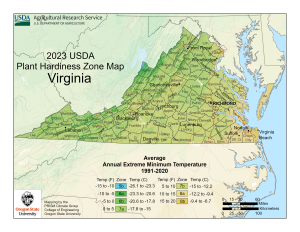
Let’s start with – what are plant hardiness zones? Plant hardiness zones is measurement (and map) created by the USDA on what the average lowest temperature is for a given location to help guide growers (homeowner or professionals) as to whether a particular plant species can survive in a certain area as far as its vulnerability to cold temperatures.
The USDA updated its plant hardiness map in 2023 from its 2012 to adjust most the country to a slightly warmer zone. This was based on 30-year data collected by the USDA and Oregon State University that reflected a 2.5 degree increase in average coldest temperate.
Here in Augusta and Rockingham County of the Shenandoah Valley we had been in zone 6b (-5*F to O*F) and now are considered 7a (0*F to 5*F).
How does this influence what we can plant?
As a landscape designer and nursery manager, I tread with caution as to what plants I’m willing to guarantee and have long term confidence in. Ultimately, I want my customers to have extensive returns from the investment that make in their landscapes. Replacing plants simply due to cold hardiness can be expensive.
Whatever our zone is determined to be, I treat my landscape and those I design as if we are in a one step colder zone. The USDA now considers us to be zone 7a, but I consider the Shenandoah Valley to be 6b and areas within that seem to have their own colder microclimate 6a. All it takes is one very cold night even over the course of 10 years to do a lot of damage. Have I adjusted and been slightly more aggressive with borderline plants? Yes, but with caution as you’ll see outlined below.
As a landscape designer, this flirtation with hardiness comes from a select group of plants that are requested:
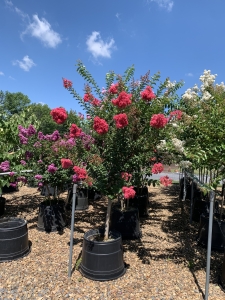
Crapemyrtle (Lagerstroemia) – Crapemyrtles are one species that have picked up use and popularity due to its drought tolerance and beauty in the middle of hot summers. This is an example of one species I’ve been more aggressive with in correlation with the USDA hardiness zone adjustment. While we do see some winter damage various years, Crapemyrtle seems to be a species that grows back from the root in nearly all cases, but is certainly a borderline hardy enough plant in the Shenandoah Valley and microclimate of the property should be considered with planting.
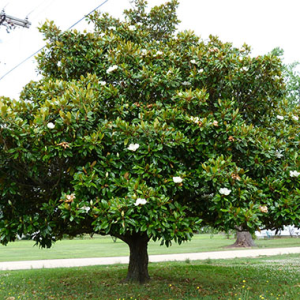
Southern Magnolia – the base species has long lived well here in the Valley, but while dwarf varieties such as ‘Teddy Bear’ and ‘Little Gem’ thrive east of the Blue Ridge Mountains I’ve seen killed by winters here in the Shenandoah Valley.
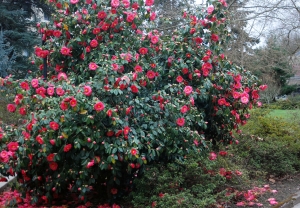
Camellia – Similar to that of dwarf Magnolia varieties, Camellia is so close to being able to grow in Harrisonburg and surrounding areas, but very risky. If you’re willing to take the chance, strategically plant against a shaded, “protected from extremes” wall or foundation.
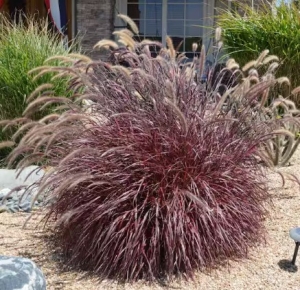
Purple Fountain Grass – Do you see this plant in beautiful form in VA even though it’s not hardy enough? Yes, but in use as an annual, not a perennial plant that grows back each year. Hardiness zone 9-11, this beautiful grass survives 20*F and up, but is requested by clients because they see in containers used as an annual. Just because you see a plant thriving in an area it shouldn’t, doesn’t mean it’s used or treated as perennial plant.
In Summary
Yes, we’ve been able to adjust slightly to use plants our warmer (usually southern) neighbors enjoy, but with caution and in small trial doses with microclimate in mind.
Article Written By:
Trent Shreckhise, Owner/Designer